Kamis, 20 Februari 2020

The Role of Non-State-Owned Religious School in Co-Production Scheme To Deliver Public Service

Introduction
The essay focuses on the role of co-production in public service delivery. The aim of the essay is to analyse the role co-production in delivering education service. The essay proposes the concept of co-production and its effects on the provision of education service. The essay takes the existence of non-state- owned religious school in Indonesia as the example of the implementation of co-production concept.
The essay is structured into four sections. The first section is introduction. It briefly introduces the aim and the structure of the essay. The second section is concepts. It defines the concept of public service delivery, public participation and co-production. The third section is the analysis. It analyse the role of co-production and its problems in the public service provision. This section also analyse the strengths and weaknesses of co-production. The last section is the conclusion. The essay concludes that co-production helps governments in providing public services especially in remote areas. However, the government needs to regulate them to maintain the quality of the service.
Concept
Public Service Delivery
Public service delivery is a process of producing outputs in public services scheme. It concerns with the provision of the outputs such as school class, the addition of road length and welfare benefits. It is a part of ‘the implementation’ of the service as the larger design of policy enactment activities (Alford and Flynn, 2012, p8). Compared to ‘delivery’ that deals with output production, ‘the implementation’ finds ‘outcomes’ such as improved literacy, road safety or mitigation of poverty.
Joshi and Moore (2004, p33-34) propose several ways to deliver the service, particularly to poor people in developing countries. First, it is a collective action that does not involve other parties called ‘self-provisioning’. In here, people in a particular area provide their basic needs using their resources. For instances, they provide security, funeral expenses and education for their children. Secondly, they ‘direct social provision through private associations’. It helps poor people to get public services such as basic education. The development of private association was dominated by religious organisations. Recent development shows that there are many forms of private association such as ‘private philanthropic foundations’, ‘locality-based associations’, and caste association (Joshi and Moore, 2004, p33).
The third way concerns with commercial basis. It is a ‘direct market provision’ where the people as the consumers must purchase the service from the market as the providers (Joshi and Moore, 2004, p34). One example of the service is health services. People must earn their resources to get the service from the providers. The next way is using ‘direct social provision through state agencies’. It is the attempt of the government to provide very basic needs of the people by forming an agency that deals with the service or appoint apparatus to deliver the services. Finally, the service can be delivered through ‘indirect state provision’. The government applies ‘sub-contracting’ mechanism where the service is initiated by the government and delivered by other agencies. The government can involve NGOs, user groups, and religious organisations in delivering the services. Joshi and Moore added that the last mechanism growth vast in poorer countries (Joshi and Moore, 2004, p34).
Public Participation
Public participation is related to the involvement of public in service provision alongside with the government. The involvement of the public is based on ‘the spirit of togetherness’ that attracts people to help each other (Suwarno, 2006, p5). Also, the public take actions to ensure the execution of government programmes. The aim of citizen participation is to voice wants and preferences, so the service can be delivered as needed. Citizen participation, therefore, is important in order to influence the government in the policy making process (Marschall, 2004, p231). From the government’s perspective, the participation can direct the decision maker to formulate desired policy (Innes and Booher, 2004, p422). It also can be used to get legitimacy in decision making that affect the public.
Innes and Booher (2004, p422) argued that good public participation must be in a collaborative form. It, therefore, needs the involvement of citizens and other parties such as non-profit organisations, planner and public administrators, and organised interests. In addition, to make an effective participation, the collaboration must be complemented with interaction and dialogue.
In a wider perspective, public participation is the involvement of the community in public policy processes. They participate in formulation, socialisation and implementation of the policies (Parry, et al., 1992, in Suwarno, 2006, p5). This perspective proposes that public participation can be exercised from the beginning of the processes to the delivery of the service. On the other hand, a narrower definition of public participation is community participation. It is an educational and empowering process that allows the community to identify issues, problems and their preferences. It also raises the responsibility of the community to formulate, organise and evaluate the collective action (Suwarno, 2006, p7).
Co-Production
The public services can be delivered through several mechanisms. One of them is co-production. Olstrom (1996, in Bovaird, 2007, p847) defines co-production as “the process through which inputs used to provide goods or services are contributed by individuals who are not in the same organisation”. The concept has a wide meaning that stresses on individual’s contribution. Joshi and Moore (2003, taken from Bovaird, 2007, 847) argued that co-production is the collaboration between state representatives and public communities to provide services to the public. In here, both parties give their substantial resources based on their ability or specialisation. In addition, both parties share ‘conjoint responsibility’ in which both formulate regulation and execute the processes (Marschall, 2004, p 231).
Co-production can be analysed using ‘consumer and production concept’ (Suwarno, 2006, p11). The concept is divided into three important terms. The first is the ‘consumer producers’. They are involved in the production process and then consume the output of the production. The second term is ‘regular producer’.  They engage in the production of the services and trade the product with payments. The last part of the concept is co-production. It connects ‘consumer producer’ and ‘regular producer’ to be involved in the processes of services or goods production. They contribute to the process by giving inputs based on their role (Park, nd, in Suwarno, 2006, p11).
Co-production requires the voluntary action of citizens. It is the situation where the citizens get involved in service delivery based on their intention (Marschall, 2004, p232). Osborne and Strokosch (2014, p34) added that the participation is not only in the production stage but also in the planning process.


The framework illustrates the interaction between government and citizenry and the relationship between participation and service provision. To make the communication more effective and efficient, Suwarno emphasises the role of co-producer in generating co-production. The role of co-producer is important because they support channelling the participation and the service.
To implement co-production in society, both government and citizens must build a good communication. It is important to transfer information related to the service delivery. Several points that are important in co-production are the knowledge about key aspects of public services delivery; expected roles and responsibilities from them; and the circumstances that may affect the quality and the delivery of the services (Marschall, 2004, p232). Co-production, therefore, requires the awareness of both sides to collaborate in the services provision.
The implementation of co-production shows the improvement of public participation. It transforms into a more formal form (Marschal, 2004, p233). It is the basis or regulation of the involvement and the role of the citizen. It is intended to clarify the roles division of both citizens and government. The role division can effectively deliver the services based on the arrangement that has been agreed.
The discussion of co-production shows the development of citizen participation in several aspects (Marschall, 2004, p233). First, it considers the growth of supportive participation from the citizen to the service delivery. In more recent form, co-production also regards the participation of non-political organisation in the service delivery. The growth of the participation shows the development of citizen behaviour to support the government policy. Secondly, it stresses on the processes to involve the participation and how to organise co-production. Thirdly, co-production not only concerns with individual action but also deals with broader interests. It also gives attention to the situation in the area where co-production is practised.
ANALYSIS
Madrasah, an Example of Co-production Concept in Indonesia
In a simpler definition, co-production “refers to an arrangement where citizens produce their services at least in part” (Brandsen and Pestoff, 2006, p592). It covers the effort of citizens to provide services with government assistance. For example, private schools that are run and managed by non-profit organisations. In here, the schools give education services independently but still follow the government regulation.
One example of co-production in Indonesia is Madrasah or Islamic school. The Madrasah were erected by local people as their concern to provide religious education in their local areas (Elfishy, 2014, p4). Recent development shows the changing of the orientation of madrasah. They are open education institutions that are not only dealing with religious materials (Hefner, nd, taken from Rahman, 2012, p235), but also combine it with secular materials in the curriculum.
There are two models of formal madrasah, state-owned madrasah and non-state-owned madrasah. Both madrasahs are formal education providers (Elfishy, 2014, p3). The first is madrasah that is owned and managed by the government. In here, government arranges the policies that affect the school, such as the appointment of teachers, school principal and class maintenance. Most teachers and officers are civil servants. The second is madrasah that is run and managed by non-profit organisation (Suryadarma et al., 2004, p403). Compared to state-owned madrasah, it has independence to manage the school. Most teachers and officers are local citizens. It mostly serves citizens in poor and remote areas. The madrasah, therefore, is an education institution that is run by  citizens and serves local people. In addition, Indonesian education system also recognises the existence of ‘madrasah diniyah’. It is a non-formal and non-profit madrasah that only teach religious education (Elfishy, 2014, p3).
The Ministry of Religion has the obligation to give supervision to both madrasahs. In here, the ministry also designs the curriculum for the school (Suryadarma et al., 2004, p403). On the one hand, the students of Madrasah get more knowledge. It is the combination of religious materials and general knowledge (Elfishy, 2014, p3). On the other hand, it might distress the final-year students facing national final exam, as it tests general subjects. Compared to public school student, students in madrasah have fewer education hours on those subjects (Elfishy, 2014, p3). It, therefore, affect the result tests of madrasah student. The average final test result of students of Madrasah is under the achievement of public school student (Huda 2016, p319). Huda added that it is proven by the student success indicator and the percentage of graduate student that is accepted into prestigious public universities.
The effort of non-state-owned madrasah to provide education service faces several problems. It makes the management, and the quality of the service is not satisfying. The main problem is the lack of funding. All non-state-owned madrasah depends on government funds (Umar, nd, taken from Rahman, 2012, p236) as the student fees are insufficient to run the school. The school administrators, therefore, must manage the school using limited funds. They must pay teachers, maintenance the building and provide sufficient facilitations (Rahman, 2012, p236). The salary for the teacher is very cheap, so many of them find alternative jobs to fulfil their daily needs, for example, as a storekeeper, farmer, sailor or teacher in other schools (Suryadarma, et al., 2004, p404). These problems affect the quality of the education. If these problems can be solved, public, especially in remote and poor areas, can expect a better education service.
Reducing Costs
The service provision by the third sector can help reducing service costs (Alford and Flynn, 2012, P31). In here, the implementation of co-production helps the government to reduce the cost of the service that is the obligation of the government. The public has built the non-state-owned madrasah voluntarily. They also manage the building maintenance. In here, the government can provide supervision to the schools that already provide the service. The government can focus to standardise and improve the teaching quality and transfer funds to fulfil the operational needs. The funds from the government, even though help the madrasah to operate, is not enough to accelerate the quality of the education provided. Another problem is related to the development of new technology. Many non-state-owned madrasahs have funding problems. It affects the provision supporting devices in accelerating teaching activities. For instances, many madrasahs do not have laboratory facilities or internet access (Huda, 2016, p326).
As formal institution that delivers education service, non-state-owned madrasah receives government transfers. The amount given is based on the number of the students, the more students, the more money is got (Suryadarma, et al., 2004, p404). On the one hand, it can help the operational of the school. The school can focus on improving the teaching quality. On the other hand, madrasah that only has a small number of students will face operational problems because the money they receive might be not enough. The problem often happens in remote areas with a small population. To solve the problem, the government concerns give more money to the school in remote areas (Suryadarma, et al., 2004, p404). It is expected to make the school keep operated and keep the students in the school.
Indonesian education system allows schools to take charge fees to the users. It is not included in the government allocated annual transfer to the school. The school usually use the fees to pay additional courses, purchase stationaries and cleaning services (Suryadarma, et al., 2004, p404). On the one hand, charging fees is a financial solution to the non-state-owned madrasah. The madrasah cannot only rely on the transfers from the government. On the other hand, the fees charged might burden the student parents especially the poor. They might criticise the aim, the amount and the accountability of the use of the fees or even deny paying.
Improving Value
The involvement of the third sector in service provision can also increase the value of the service (Alford and Flynn, 2012, P31). Co-production that involves the client as the co-producer can improve the quality of the service. Alford and Flynn argued that, compared to government acting alone, collaboration with other parties can raise the effectiveness of the service. Non-state-owned madrasah supports the effort of the government in raising the quality of education. The existence of the madrasah, therefore, is crucial to improving education services, especially in poorer and more remote areas. It is by the statement of Alawiyah (2014, p520) that argued that madrasah raises the number of students. On the other hand, the effectivity of the service is still under the achievement of the public schools. Non-state-owned madrasah is still left behind public schools and state-owned madrasah. The quality and the salary of the teacher are low. Teacher quality and salary in public school are higher as most of them are civil servants (Suryadarma, et al., 2004, p404). The facilitation in public schools is much better than that in non-state-owned madrasah. Poor management of the school makes the public place madrasah as the last option to get an education (Alawiyah, 2014, p52). The public also considers that the alumni of madrasah cannot compete as competitive as public school alumni. Alawiyah, however, argued that madrasah provides religious values that are very crucial in character building. It is value-added that is offered by madrasah.
To improve the education service provision by madrasah, the Indonesian government launches several programmes. First, in 2003 the government established “Program Pengembangan Madrasah” (Madrasah Development Centre). It is an organisation that focuses on the improvement of the quality of madrasah. The programme has several functions such as assistance, quality assurance, and technical guidance. It is also a facilitator for the public to send feedbacks or ideas related to the education policy (Directorate General of Islamic Education, 2016, p). Secondly, the Ministry of Religion (MoR) also considers the importance of supervision function by appoints supervisors. The supervisors have tasks to give academic and managerial supervision to madrasah (Minister of Religion, 2012, p3). To maintain the quality of the service, MoR arranges internal audit that focusses on the performance of the school and teachers. For the teachers, the audit is intended to do ‘performance appraisal’ which assesses skills, potentials, strengths and weaknesses (Lestiawan, 2016, p45). The audit report can be used to improve the quality of education service and prevents from factors that undermine the service delivery.
Conclusion
Co-production helps the government to deliver public service especially in remote areas.  By using this concept, the government can educate and empower citizens to identify their problems and gain solutions related to the public service. It is intended to make the citizens have the ability to formulate, manage and deliver their service with the supervision of the government. Co-production, therefore, needs active participation and involvement from the citizens.
For the citizens, the concept of co-production can be used to specify their needs. The service, therefore, might meet their preference. On the one hand, co-production concept might benefit the majority of citizen because they have more voices. On the other hand, the government must also consider the existence of the minority. It is the party that might not get any benefit from the co-production.
As the service is run by the citizens, the government might experience difficulties in control the service provision. In addition, the accountability of the service might be questionable. The variation of the service delivery also can create a standard gap among the service providers. The government, therefore, must regulate the service provision in order to standardise and control the service by its co-producer. The government also needs to evaluate the co-production scheme. It is to identify problems and find solutions to solve it. By controlling the implementation and evaluating the result, the government can exercise co-production concept in other forms of public services.

List of Reference
Alawiyah, F. (2016). Pendidikan Madrasah Di Indonesia (Madrasah Education System in Indonesia). Jurnal Aspirasi (Trial), 5(1), 51-58.
Alford, J., & O'Flynn, J. (2012). Rethinking Public Service Delivery: Managing With External Providers. Palgrave Macmillan.
Bovaird, T. (2007). Beyond Engagement and Participation: User and Community Coproduction of Public Services. Public Administration Review, 67(5), 846-860.
Brandsen, T., & Pestoff, V. (2006). Co-production, the Third Sector and the Delivery of Public Services: An Introduction. Public Management Review, 8(4), 493-501.
Directorate General of Islamic Education, (2016), Keputusan Direktur Jenderal Pendidikan Agama Islam No. 721 Tahun 2016 tentang Pedoman Pengelolaan Organisasi Pusat Pengembangan Madrasah (The Decree of The Director General of Islamic Education No. 721 year 2016 on The Organisational Management Guidance of Madrasah Development Centre). Jakarta.
Elfishy, L. (2014). Sejarah Perkembangan Pendidikan Madrasah Diniyah Awaliyah (MDA) (The Development of Madrasah Diniyah Awaliyah). Retrieved May 10, 2017 from: https://www.academia.edu/9156443/sejarah_perkembanngan_pendidikan_madrasah_diniyah_awaliyah_MDA_?auto=download
Huda, K. (2016). Problematika Madrasah Dalam Meningkatkan Mutu Pendidikan Islam (Islamic School Problems in Improving Islamic Education Quality). Jurnal Dinamika Penelitian, 16(2), 309-336.
Innes, J. E., & Booher, D. E. (2004). Reframing Public Participation: Strategies for the 21st Century. Planning Theory & Practice, 5(4), 419-436.
Joshi, A., & Moore, M. (2004). Institutionalised Co-production: Unorthodox Public Service Delivery in Challenging Environments. Journal of Development Studies, 40(4), 31-49.
Lestiawan, B. (2016). Pengaruh Audit Mutu Internal Terhadap Kinerja Guru di Madrasah Aliyah Negeri Lamongan (The Impact of Internal Quality Audit to the teacher Performance in Public Islamic High School in Lamongan (Doctoral Dissertation). Surabaya: UIN Sunan Ampel.
Marschall, M. J. (2004). Citizen Participation and the Neighbourhood Context: A New Look at the Coproduction of Local Public Goods. Political Research Quarterly, 57(2), 231-244.
Minister of Religion. (2012). Peraturan Nomor 2 Tentang Pengawas Madrasah dan Pengawas Pendidikan Agama Islam Pada Sekolah (The Ordinance of The Minister of Religion No. 721 Year 2012 on Supervision of Madrasah and Supervision of Islamic Education in Schools). Jakarta.
Osborne, S. P., & Strokosch, K. (2013). It Takes Two to Tango? Understanding the CO‐production of Public Services by Integrating the Services Management and Public Administration Perspectives. British Journal of Management, 24(S1), S31-S47.
Rahman, K. A. (2012). Peningkatan Mutu Madrasah Melalui Penguatan Partisipasi Masyarakat (The Improvement of the Quality of Madrasah by Strengthening Community Participation). Jurnal Pendidikan Islam, 1(2), 227-246.
Suryadarma, D., Suryahadi, A., Sumarto, S., & Rogers, F. H. (2006). Improving Student Performance in Public Primary Schools in Developing Countries: Evidence from Indonesia. Education Economics, 14(4), 401-429.
Suwarno, Y. (2006). Co-Production in Public Service; A Shared-Role of Bureaucracy and Citizenry. Good Governance, 1(-), 1-17.

Kota yang Tenang dan Menenteramkan, Gorontalo

Merupakan anugerah dan kesempatan luar biasa bagi saya untuk bisa mengunjungi kota-kota yang ada di nusantara. Selain memperluas  networking, saya juga bisa mengeksplore tempat-tempat populer di kota-kota tersebut terutama yang mempunyai nilai sejarah.
Suasana Pagi Berkabut di Gorontalo
Kota yang saya kunjungi pada bulan September 2019 ini merupakan ibukota sebuah provinsi yang namanya identik, Gorontalo. Berbeda dengan Provinsi Gorontalo yang baru diresmikan pada tahun 2000 Kota Gorontalo sudah mempunyai sejarah panjang sejak didirikan sekitar tahun 1728.
Kesan yang saya dapat setelah mengunjungi kota ini, kota ini tidak terlalu ramai dan fasilitas umum yang tersedia relatif tidak sebanyak atau sebaik ibukota-ibukota provinsi lain di pulau Sulawesi. Di kota ini hanya satu mall terpadu yang berukuran besar dan relatif lengkap yakni Citimall Gorontalo. Namun selama beberapa kali mengunjungi mall ini, suasana dan pengunjungnya lumayan sepi. Untuk fasilitas jalan raya, suasana jalan juga relatif sepi. Lalu lalang kendaraan tidak terlalu padat, kecuali di lokasi-lokasi dekat SPBU yang diwarnai antrian panjang kendaraan yang menunggu giliran membeli BBM.
Citimall Gorontalo
Kendaraan umum di kota ini lumayan terbatas, dan selama berada di kota ini, saya tidak menemukan adanya taksi resmi. Untungnya di kota ini sudah mengenal adanya transportasi online baik kendaraan roda dua, tiga maupun empat. Uniknya, untuk layanan gojek, kendaraan yang digunakan oleh driver online adalah bentor, bukan motor standar seperti di kota-kota lain.
Salah Satu Sudut Kota Gorontalo
Fasilitas lain yang sempat saya amati dari kota ini adalah keberadaan hotel-hotel yang representatif. Sudah ada beberapa hotel yang terkenal mempunyai layanan bagus di kota ini, namun jumlahnya saya kira masih kurang mampu menampung banyak tamu jika ada acara berskala besar atau nasional digelar.
Perpaduan Antara Pemukiman dan Perbukitan serta Muara
Selama di kota Gorontalo, saya menyempatkan mengunjungi beberapa lokasi yang popular di kota ini diantaranya:

Lapangan Taruna Remaja
Lapangan atau Alun-alun ini merupakan areal yang luas yang dipadu dengan lapangan tenis. Pada titik utama lapangan ini terdapat sebuah monumen yang diresmikan oleh KASAD Jenderal Mulyono pada 12 September 2018. Monumen ini dinamakan Monumen Tilongolo Nani Wartabone yang didirikan untuk memperingati dan menghormati tindakan heroik Nani Wartabone memproklamirkan kemerdekaan Indonesia dari tangan penjajahpada tahun 1942. Selain patung Nani Wartabone , di dekat monumen ini dipamerkan dua kendaraan tempur yakni FV601 Saladin buatan UK.
Monumen Tilongolo Nani Wartabone
Lokasi lapangan ini sangat strategis karena dilewati jalur menuju ke arah laut teluk Tomini. Selain itu, lokasi alun-alun ini berhadapan dengan rujab Gubernur Gorontalo.Di salah satu sisi alun-alun juga terdapat area luas yang dipergunakan untuk wisata kuliner berupa warung tenda. Jika malam tiba, banyak pengunjung yang dating ke lokasi ini untuk menikmati suasana sekaligus hidangan yang dijajakan di lokasi ini.

Klenteng Hong San Bio
Klenteng ini merupakan sebuah tempat persembayangan yang didirikan sejak 2003 dan pembangunannya masih berproses hingga tahun 2018. Lokasi klenteng ini sangat indah karena berada di salah satu puncak bukit yang menghadap ke laut luas. Namun demikian, klenteng ini tetap sejuk karena dirindangi pepohonan dan terpaan angin laut.
Klenteng Hong San Bio Gorontalo
Saya beserta rombongan mampir ke Klenteng ini awalnya berniat hanya untuk mengabadikan pemandangan di sekitar klenteng ini. Namun sambutan yang kami terima dari para jemaat yang usai bersembahyang sungguh hangat. Kami disuguhi jamuan berupa gorengan dan minuman serta obrolan akrab tentang berbagai topik.

Taman Wisata Religius Bubohu
Selepas dari Klenteng Hong San Bio, kami menuju ke satu tujuan wisata lain di daerah Bubohu. Perjalanan menuju ke lokasi ini lumayan mendebarkan, karena jalanan sempit dengan banyak kelokan serta tanjakan dan turunan tajam. Dibutuhkan pengalaman serta kewaspadaan ekstra untuk mengendarai kendaraan di jalur ini. Meskipun lumayan rawan, jalur ini juga menawarkan pemandangan yang tak kalah seru, yakni perpaduan antara kawasan perbukitan dan laut biru yang menghampar luas.
Taman Wisata Religi Bubohu

Satu diantara Beberapa Gazebo

Taman Wisata Religius Bubohu merupakan sebuah lokasi yang ditata sedemikian rupa sehingga menjadi sebuah lokasi wisata cantik bernuansa islami. Di lokasi ini, terdapat bangunan-bangunan yang menyerupai pemondokan dimana pengunjung bisa duduk di dalamnya sambil menikmati suasana tenang dan damai. Selain terdapat bangunan-bangunan yang menjadi perpaduan antara nuansa alami dan islami, di taman wisata ini juga terdapat kolam yang cukup luas. Dari atas kolam ini, pengunjung bisa memberi makan ikan serta burung dara yang dibiarkan lepas. Tidak perlu repot menyiapkan makanan satwa ini karena pengelola taman wisata menjual makanan tersebut dengan harga terjangkau. Tidak hanya membeli pakan satwa, pengunjung juga bisa menikmati makanan dan membeli souvenir yang dijual oleh pengelola taman wisata ini.
Spot Foto Wajib
Masjid Walima Emas
Lokasi berikutnya yang kami tuju adalah Masjid Walima Emas, masjid yang sangat indah dengan lokasi di lereng sebuah bukit dengan pemandangan laut yang menakjubkan. Lokasi masjid ini cukup jauh dari Kota Gorontalo dengan jarak tempuh sekitar 1,5 jam dan jalanan sempit serta berkelok-kelok tajam.
Masjid Walima Emas Gorontalo
Masjid ini dibangun sejak 2008 dan saat kami berkunjung masih dalam proses melanjutkan pembangunannya. Arsitektur dan penataan masjid ini sangat unik dan akan membuat betah pengunjung yang datang, baik yang sekedar berkunjung maupun yang berniat melakukan ibadah. Bagi saya pribadi, lokasi masjid ini sangat strategis karena lokasi yang tenang karena relatif jauh dari lokasi pemukiman warga, ditambah dengan pemandangan yang luas, sebuah perpaduan yang dapat menenteramkan pengunjung yang datang. Karena spot pemandangan yang ditawarkan sungguh menakjubkan. saya beberapa kali berpindah lokasi di areal masjid ini untuk mengabadikannya dalam memori kamera. Selain arsitektur yang indah, saya mengabadikan pemandangan teluk Tomini yang dipadu dengan megahnya kawasan perbukitan yang menjulang tinggi.
Bunga Kayu dan View Teluk Tomini

View Menakjubkan dari Masjid Walima Emas

Benteng Otanaha
Keesokan harinya, setelah menyelesaikan agenda lanjutan di kantor, kami mengexplore objek wisata lain yang mempunyai nilai historis tinggi di Gorontalo yakni Benteng Otanaha. Sejarah mengenai pembangunan benteng ini terbagi dalam beberapa versi. Namun demikian ahli sejarah menyepakati bahwa bangunan bersejarah ini menjadi saksi perebutan kekuasaan antara Raja setempat dengan penjajah Portugis. Kondisi terkini, areal benteng ini dilindungi oleh pemerintah dengan statusnyasebagai cagar budaya.
Satu dari Beberapa Benteng di Kompleks Benteng Otanaha
Lokasi benteng ini berjarak tempuh sekitar 1 jam dari Kota Gorontalo. Benteng ini terletak di sebuah bukit yang strategis untuk dijadikan basis pertahanan terhadap serangan musuh. Selain strategis, benteng ini juga menawarkan pemandangan yang sangat menarik, yakni view Danau Limboto. Pemandangan terbaik ditawarkan pada saat senja hari, karena matahari yang sedang kembali ke peraduannya akan menjadikan pemandangan danau menjadi dramatis. Selain view danau Limboto, dari salah satu sisi banteng ini, pengunjung juga bisa menikmati pemandangan kota Gorontalo dari kejauhan.
View Danau Limboto
Danau Limboto dari Benteng Utama


Saya cukup terkesan dengan kondisi benteng ini karena bersih dan rapi. Boleh dibilang jika benteng yang terdiri dari beberapa bangunan ini terawat dengan baik. Dalam kompleks benteng ini disediakan fasilitas gedung pertemuan dan beberapa gazebo yang dapat digunakan untuk berteduh dari panasnya matahari atau hujan. Selain itu pengelola juga menyiapkan beberapa spot instagrammable bagi pengunjung yang ingin mengabadikan pemandangan di areal ini.
Bersih dan Rapi
Wisata Kuliner
Untuk melengkapi catatan tentang kesan saya terhadap Kota Gorontalo, berikut ini beberapa lokasi wisata kuliner yang berkesan untuk saya saat bertugas di Gorontalo. Pertama, sajian Sarabba Jalan Ahmad Yani di seberang BNI Cabang Gorontalo. Sarabba yang disajikan di warung ini yang sangat pas nikmatnya ditambah dengan pisang goreng yang rasanya mantap. Kedua, Rumah Makan Ohara dengan menu utamanya sate tuna. Selain sate tuna, masakan-masakan lain tidak kalah nikmatnya. Restoran ini menawarkan pemandangan muara sungai yang di teluk Tomini serta bukit terjal yang ada diseberang muara. Ketiga, Angelato yang berlokasi di dekat lapangan Taruna Remaja. Bagi saya, restoran ini cukup mewah dari sisi hidangan dan penataan interiornya. Masakan yang disajikan pun juga beraneka ragam dengan menu utama gelato berbagai rasa.
Sate Tuna RM Ohara

Sambil Menikmati Sajian Tak Lupa Menikmati Pemandangan

Angelato, Salah Satu Resto Hit di Gorontalo

Saya tidak mengira bahwa Gorontalo menawarkan banyak lokasi yang layak dikunjungi untuk mensyukuri keindahan alam atau sekedar menghilangkan penat dari rutinitas harian. Bagi anda yang mempunyai jiwa petualang dan adventure, Gorontalo menawarkan sensasi seru menyusuri jalanan berkelok dan menikung tajam serta curam. Tentunya disuguhi dengan pemandangan menakjubkan teluk Tomini. Walaupun kotanya mungkin terasa kurang gemerlap, namun sensasi berpetualang itu setidaknya bisa menjadi kompensasi yang setimpal. 

Once Upon a Time in Cirebon

Beginilah hidup, ada suka dan ada duka. Kadang bergantian dan seringnya berkombinasi. Namun, hidup kadang ada garingnya juga. Ngga seru namun ngga juga membosankan, just so so. Blog ini aku tulis buat kenang-kenangan bahwa aku pernah menjalani hari yang begitu random. Ambyar, ga bersemangat, merasa “sendiri", ketemu teman baru, eksplore suatu tempat yang belum pernah dikunjungi sebelumnya serta mencoba kuliner populer suatu daerah yang dinamai Cirebon. 
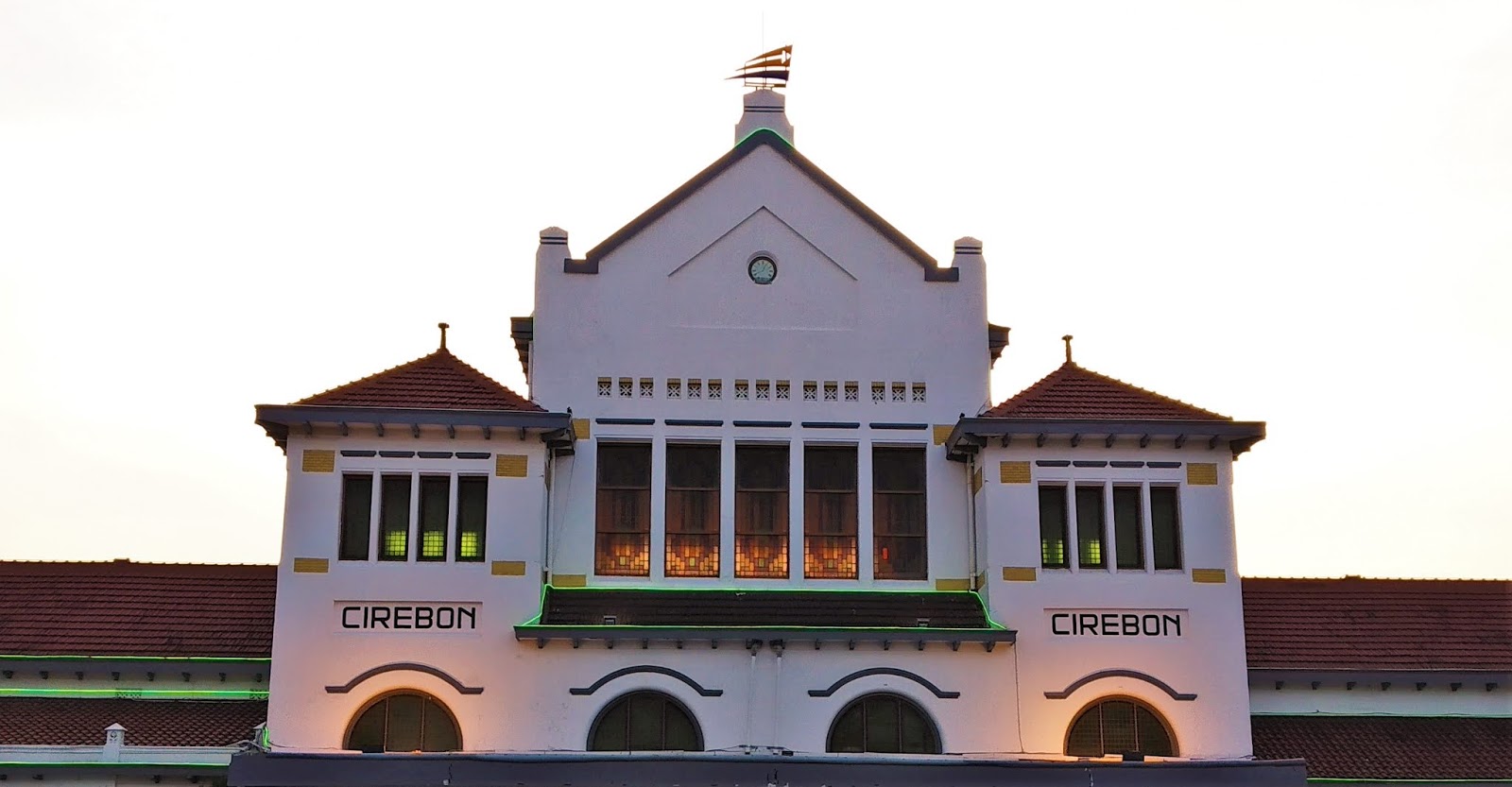
Stasiun Cirebon

Hari itu Sabtu di bulan November. Aku menuju ke Cirebon untuk menghadiri resepsi pernikahan seseorang yang aku kenal sejak dua tahun sebelumnya. Aku sudah berjanji untuk datang ke pernikahannya saat dia mengundangku. Janji yang harus aku tepati jika tidak ada udzur. Walaupun lumayan sering berkomunikasi, aku belum pernah sama sekalipun bertatap muka dengannya. Terus terang “dia” ini adalah sosok yang aku damba untuk bisa menyempurnakan separuh agamaku. Namun memang beginilah skenario dari-Nya yang Maha Agung, aku bertatap muka langsung justru di hari bahagianya yang sekaligus menjadi salah satu hari yang ingin segera aku lalui, tinggalkan, dan lupakan. 
Ada Spot Cantik di Stasiun Gambir
Perjalanan ini aku mulai dari kosanku sesaat setelah sholat subuh usai kutunaikan. Dari kosan aku menuju stasiun Gambir untuk bersiap melanjutkan perjalanan menggunakan kereta api. Tidak ada yang istimewa dari perjalanan kereta api ini. Semua berlangsung lancar tanpa kendala. Dalam perjalanan ini, aku sendiri, karena sohibku yang merupakan sahabat dari sang mempelai, yang seharusnya menemaniku, ada urusan mendadak yang tidak bisa ditinggalkannya. Untungnya dia memberikan CP temannya yang lain yang bisa diajak kondangan barengan.
Ambil Nafas Dalam-Dalam di Sini
Pukul 9.45, kereta api tiba di Stasiun Cirebon. Perjalanan aku lanjutkan dengan menggunakan transportasi online menuju ke lokasi resepsi yang tidak terlalu jauh jaraknya dari stasiun. Sesampai di lokasi, aku segera menghubungi CP yang diberikan temenku. Syukurlah akhirnya ada temen buat kondangan.
Saat resepsi berlangsung, praktis aku berada di sebuah acara pesta dimana aku belum pernah bertatap muka langsung dengan semua yang hadir di acara tersebut, bahkan dengan para mempelainya. Ada perasaan wah.. seru bin aneh juga ini moment..
Tidak ada momen spesial atau dramatis saat aku mengucapkan selamat secara langsung kepada mempelai berdua. Aku bersyukur Allah SWT menganugerahiku hati yang tabah dan ikhlas melihat wanita yang kudamba bersanding mesra dengan imamnya. Mereka memang merupakan pasangan yang sangat ideal dari bibit, bebet dan bobotnya. Aku turut bahagia dan berdoa semoga keberkahan melimpahi pernikahan mereka.
Pamer Bojo
Aku tidak sempat menikmati hidangan yang disajikan, karena jumlah tamu yang demikian banyak dan antrian yang cukup lama, kecuali segelas air minum kemasan yang sempat aku comot saat keluar gedung resepsi. Demikian buru-burunya teman-teman baru yang ingin segera berwisata kuliner di kota ini.
Bersama teman-teman baru, aku melanjutkan cerita hari itu. Lokasi pertama yang kami tuju adalah resto nasi jamblang Bu Nur, resto nasi jamblang paling popular di Cirebon. Sebagai informasi, nasi jamblang adalah hidangan nasi dengan lauk yang beraneka ragam yang disajikan di atas daun jati. Di warung Bu Nur ini, lauk yang disajikan sangat bervariasi dengan harga yang sangat murah. Pantas jika warung ini sangat popular karena antrean penikmat kuliner ini mengular dan butuh waktu cukup lama sebelum kita mendapat giliran memesan makanan yang kita inginkan.
Antrian di Nasi Jamblang Bu Nur
Tidak puas dengan Nasi Jamblang, kami lanjut ke makanan khas Cirebon berikutnya yakni Empal Gentong H Apud. Makanan yang paling direkomendasikan disini adalah empal gentong dan sate kambingnya yang maknyuss. Enak mantap. Sebagaimana kondisi di Nasi Jamblang Bu Nur, resto Empal Gentong H Apud juga penuh dengan para penikmat kuliner ini. Untungnya, walaupun banyak pengunjung, namun layanan di resto ini cukup cepat sehingga kami tidak perlu menunggu terlalu lama untuk dapat menikmati hidangan yang kami pesan.
Kuliner Berikutnya, Kedai H. Apud
Karena jadwal perjalanan kereta balik ke Jakarta masih lama, kami putuskan untuk eksplore tempat wisata yang ada di sekitaran Cirebon. Dengan menyewa mobil, kami putuskan untuk menuju ke Telaga Cicerem yang berada di kaki gunung Ciremai dan masuk ke dalam wilayah Kabupaten Kuningan.
Perjalanan menuju ke lokasi ini ditempuh dalam waktu kurang lebih satu jam melewati jalanan yang cukup nyaman. Pemandangan yang tersaji dalam perjalanan ini didominasi oleh kawasan permukiman dan sesekali memasuki area persawahan menghijau dengan latar belakang kawasan perbukitan.
Selamat Sore dari Kaki Gunung Ciremai
Sesampai di lokasi, dengan membayar tiket masuk sebesar Rp5.000 per pengunjung, kami bisa menikmati udara segar dengan pemandangan telaga biru yang berukuran cukup luas. Pengunjung bisa mengitari telaga ini sambil menikmati sensasi berjalan di antara rimbun pepohonan yang ada. Pengunjung juga bisa menuju ke bagian atas dari komplek telaga ini untuk menikmati pemandangan telaga dari ketinggian dan sawah yang membentang di punggung bukit. Pihak pengelola juga menyediakan beberapa gazebo kecil yang berfungsi sebagai tempat berteduh para pengunjung.
Telaga Biru Cicerem Kuningan
Telaga ini mempunyai satu spot cantik yang instagramable yakni dermaga kecil dengan lambang love yang berlatar belakang telaga dan rimbunnya pepohonan. Selain itu, bagi pengunjung yang ingin relaksasi secara ekonomis, bisa duduk di pinggir telaga sambil merendam kaki ke dalam air. Airnya yang dingin menyejukkan cukup efektif menjadi obat penghilang penat. Setidaknya itu yang aku rasakan.
Spot Instagramable Telaga Cicerem
Pukul 4 sore kami balik ke Kota Cirebon untuk selanjutnya menuju ke Jakarta menggunakan Kereta Api. Namun karena jadwal keberangkatan kereta masih lumayan lama kami sempatkan untuk mencoba tempat makan yang populer di Cirebon yakni Bubur M Toha yang berlokasi tidak jauh dari Stasiun. Mungkin karena aku sudah cukup kenyang, makanya aku tidak menemukan sesuatu yang spesial dari hidangan yang aku pesan. Setidaknya sudah hilang rasa penasaranku.
Suasana Stasiun Cirebon di Kala Malam
Agenda berikutnya adalah menunggu jadwal keberangkatan kereta menuju Jakarta. Kereta tiba dan berangkat tepat waktu dari stasiun Cirebon, membawa kisah dan kesan yang membuatku beberapa kali tersenyum sendiri. Senyuman pait.

Penuh Rasa Syukur di Masjid Raya Baiturrahman Aceh

Alhamdulillah, Maha Besar Allah dengan segala kuasanya. Saya sangat bersyukur diberi kesempatan untuk bisa secara langsung menunaika...